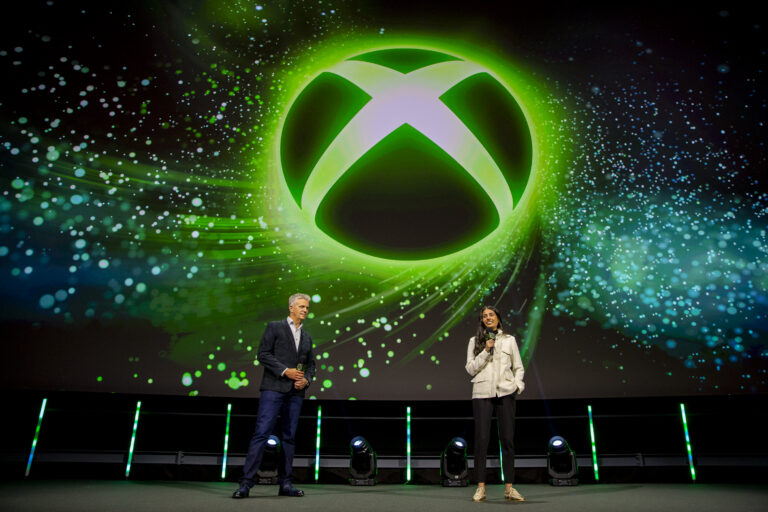
In one of the most corporate twists in gaming history, XBOX has announced a smooth, quiet restructuring marked by aggressive studio consolidation, layoffs, and a deliberate push to become a leaner, more agile operation. Under the direction of CEO Asha Sharma and CCO Matt Booty, the underperforming giant is systematically rolling back years of previous leadership's acquisitions, spinning off creators and shifting its most critical intellectual properties, such as Halo, under heavyweights like Activision and Bethesda.
This dramatic pivot, REST XBOX, represents a polarizing corporate gamble. Depending on how the cards fall, this could either serve as a blueprint for the future of sustainable games management or a catastrophic bridge-burning event that permanently damages Xbox's relationship with independent studios, The primary risk of this leaner approach lies in the message it sends to smaller, creative drive game studios, For nearly a decade, XBOX martered itself as a safe harbor for independent and mid-tier developers, offering them deep Microsoft's money through Xbox as in corporate pockets and the security of day-one Game Pass releases, By divesting from aclaimed studios like Double Fine, Compulsion Games, and Undead Labs and leeting Ninja Theory face potiential closure after external talks stalled amd XBOX might be shattering that narrative.
If this restructure fails to stabilize Xbox's bottom line, the long-term fallout could be devastating to its partnership pipeline. Independent studios, small or big, will likely view XBOX not as a protective partner, but as an unstable entity prone to sudden, severe course corrections. Trust is hard to build and easy to break. If smaller developers decide that partnering with Microsoft Xbox means risking their operational autonomy or facing sudden job cuts, they will look to alternative publishers or stick to self-publishing. XBOX risks being left with a hallowed-out portfolio, entirely dependent on a few blockbuster franchises while losing diverse creative projects that traditionally gave its platform unique experiences,
Conversely, if this consolidation works, Xbox could break through the bloat that has plagued the modern AAA gaming industry and emerge as a triumphant pioneer of efficient studio management.
For years, the video game industry has struggled with ballooning budgets, agonizingly long development cycles, and massive corporate layers that slow down decision-making. By reducing its management tiers, merging developers with overlapping expertise, such as bringing Playground Games and Turn 10 together and assigning massive legacy properties to proven live-service powerhouses like Activision, Xbox is attempting to build a highly optimized machine.
If this strategy succeeds, it will prove that a modern gaming platform cannot survive on unchecked expansion alone; it requires a razor-sharp focus on execution, resource sharing, and sustainable margins. A successful lean Xbox would deliver higher-quality games faster, cut down on the redundant corporate overhead that delays project greenlights, and create a resilient business model capable of weathering economic downturns.
Xbox’s radical restructure is a definitive crossroad. By stripping away its mid-tier infrastructure to focus on core franchises, Microsoft is testing a brutal hypothesis: that in the modern gaming market, smaller is smarter.
If they lose, they risk alienating the creative lifeblood of the industry and isolating themselves from the broader community of independent creators. But if they break through the turbulence, they may well establish a vital new standard for how global gaming portfolios must be managed in the decades to come.
Related coverage
More Xbox →




Trending on the Xbox Forum
Conversation (0)
No comments yet. Be the first.