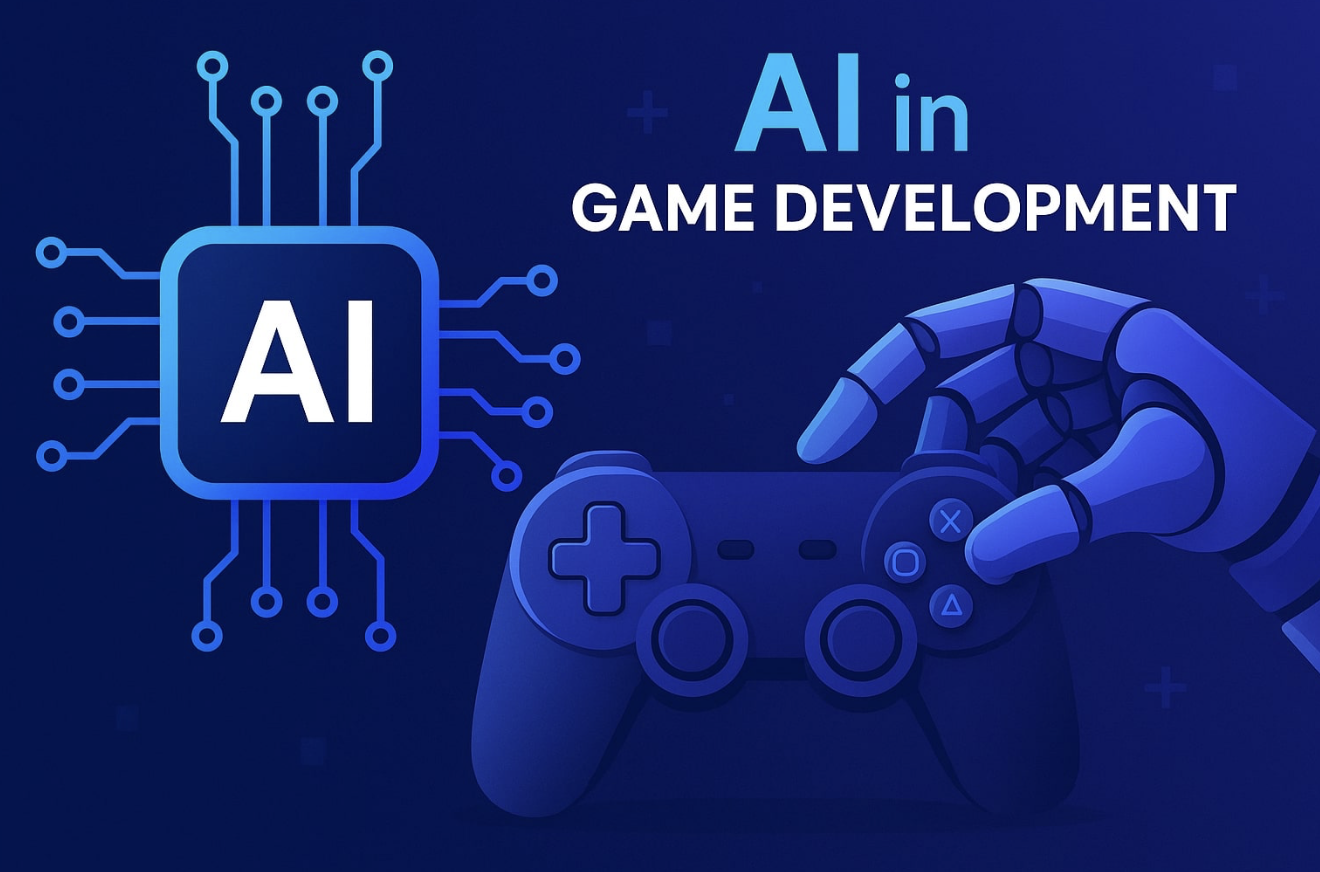
AI IN GAMING DEVELOPMENT: THE HUMAN BEING REPLACED? IS THE FUTURE OF VIDEO GAMES IN DANGER?!
NEXT GENERATION GAMING | INDUSTRY INVESTIGATION
Artificial Intelligence. Two words that are becoming increasingly difficult to escape. From generating images and writing articles to creating music, producing videos, and assisting with complex computer programming, AI is rapidly changing the way people work across multiple industries.
But what about the video game industry?
Are the games we purchase, play, and enjoy still being created primarily by human beings? Or are developers increasingly turning to artificial intelligence to do the work once performed by artists, programmers, writers, animators, and other creative professionals? The answer might surprise you. AI isn't simply knocking on the gaming industry's door anymore. It's already inside, and while some developers see it as an opportunity to improve productivity, others are concerned about what this technology could mean for the people who make video games possible.
ARE WE WITNESSING THE EVOLUTION OF GAME DEVELOPMENT, OR THE BEGINNING OF THE HUMAN BEING'S REPLACEMENT?
AI IS ALREADY PART OF VIDEO GAME DEVELOPMENT!
Let's establish something important: Artificial intelligence isn't entirely new to video games. For decades, developers have implemented AI-driven systems to control enemy behavior, simulate opponents, manage character interactions, and create more challenging gameplay experiences.
Think about the enemies that pursue you, the opponents that adapt to your movements, or the characters that react to what's happening around them. These systems have been part of gaming for years. However, the conversation has changed dramatically with the introduction of generative AI.
We're no longer talking exclusively about programming an enemy to follow a player or react to an attack. We're talking about technology capable of assisting with artwork, dialogue, coding, animation, music, voice generation, world-building, and other aspects of game production, and studios are taking notice. According to Unity's 2026 Gaming Report, based on a survey of 300 respondents, AI is already being used across several development disciplines.
Among the reported applications:
62% use AI for coding assistance.
44% use AI for writing and narrative design.
40% use AI for NPC behavior.
35% use AI for automated playtesting.
35% use AI for concept art and game assets.
30% use AI for character animation.
These numbers demonstrate that AI is becoming more than an experimental technology. It's becoming part of the development process.
THE NUMBERS ARE GETTING HARDER TO IGNORE!
The Game Developers Conference (GDC) released its 2026 State of the Game Industry report, surveying more than 2,300 industry professionals. The findings are particularly interesting.
According to the report:
36% of surveyed game industry professionals use generative AI tools as part of their work.
Among respondents working directly at game studios, that figure was 30%.
81% of generative AI users reported using it for research or brainstorming.
47% reported using it for code assistance.
35% reported using it for prototyping.
But here's where things get interesting. Despite increasing adoption, the industry's attitude toward generative AI isn't particularly enthusiastic. 52% of surveyed professionals believe generative AI is having a negative impact on the gaming industry. Only 7% believe its impact is positive.
Read those numbers again.
More than half of the professionals surveyed believe this technology is having a negative effect on their industry. That's a significant warning sign and it raises an important question: If the people developing our games are increasingly concerned about AI, should gamers be concerned too?
ARE GAME DEVELOPERS BEING REPLACED?
This is where the conversation becomes considerably more serious. Game development involves thousands of creative and technical decisions. Behind every major release are teams of people working countless hours to bring an idea to life.
Artists create characters and environments, writers develop stories, dialogue, and personalities, programmers build the systems that make everything function, animators bring characters to life, voice actors give those characters personality and emotion, sound designers create the audio experiences that immerse players,.
Now imagine a studio deciding that some of those responsibilities can be handled by AI. What happens to the people who previously performed those jobs?
Could a development studio use AI to generate hundreds of character concepts instead of hiring additional artists?
Could AI-assisted dialogue reduce the amount of work required from writers?
Could synthetic voices reduce the need for certain voice recordings?
Could automated testing reduce the number of people required to identify problems during development?
These aren't simply futuristic possibilities. They are applications being explored and implemented across the industry. However, there's an important distinction between AI assisting a worker and AI replacing that worker and the gaming industry needs to be honest about that distinction.
THE LAYOFFS – IS AI MAKING THE SITUATION WORSE?
The gaming industry has already experienced significant employment instability. Major publishers and development studios have announced layoffs, cancelled projects, and restructuring initiatives. According to GDC's 2026 report, 28% of surveyed industry professionals said they had been laid off during the previous two years. Among U.S. respondents, that figure increased to 33%.
These numbers are alarming. But we need to be careful about drawing conclusions. The report does not establish that AI caused those layoffs. Financial pressures, project cancellations, restructuring, changing business strategies, and other factors also contribute to employment losses.
Nevertheless, introducing increasingly capable automation into an industry already experiencing employment uncertainty creates legitimate concerns. For someone entering the gaming industry today, the question isn't simply whether they have the skills to create great games. It's whether those skills will remain in demand as technology continues to evolve and that's a conversation studios, publishers, and developers cannot afford to ignore.
WHAT ABOUT THE CREATIVE SIDE OF GAMING?
Here's something I believe deserves considerably more attention. Video games are more than software. They're creative experiences. Think about the emotional impact of games like The Last of Us, God of War, Red Dead Redemption 2, and Resident Evil.
What makes these experiences memorable?
It's the storytelling, character development, performances, music, atmosphere, artistic direction, and countless creative decisions made by human beings. Technology can help reproduce certain elements, but can it truly replace the human experience behind them?
Can an algorithm understand the emotional weight of a character's final moments?
Can automatically generated dialogue deliver the same performance as a talented voice actor?
Can an AI-generated environment reproduce the creative vision of an artist who spent years developing a particular artistic style?
AI may be able to assist with some of these tasks, but assistance and creative replacement aren't necessarily the same thing, and I don't believe gamers should automatically accept one as a substitute for the other.
THE OTHER SIDE – AI COULD ALSO HELP SMALLER DEVELOPERS!
To be fair, there is another side to this discussion. Not every developer has the financial resources of Sony, Microsoft, Nintendo, EA, or Capcom. Independent developers frequently operate with smaller teams, limited budgets, and fewer resources. For these studios, AI could be an incredibly useful tool.
It could help a small development team:
Create early concept artwork.
Develop prototypes more quickly.
Identify coding problems.
Automate repetitive testing.
Organize development tasks.
Explore different design possibilities.
Reduce certain production expenses.
In fact, AI could help smaller studios compete in an industry where development costs continue to increase. That isn't necessarily a bad thing. The question is whether these tools will help people create better games or simply become another excuse for companies to reduce their workforce and maximize profits. There's a significant difference.
WHAT DOES THIS MEAN FOR GAMERS?
Ultimately, gamers have a stake in this conversation too. When we purchase a game, we're purchasing an experience created by a development team. We want quality. We want originality. We want meaningful storytelling, memorable characters, outstanding gameplay, and experiences that make us excited to pick up a controller. Most importantly, we want developers to care about what they're creating. If AI helps developers produce better games, improve performance, eliminate repetitive work, and spend more time focusing on creativity, that's something worth embracing.
But what happens when companies begin prioritizing production speed and cost reduction over the people responsible for creating those experiences?
What happens when studios flood the marketplace with automatically generated content?
Will originality suffer?
Will artistic identities become less distinctive?
Will gamers eventually find themselves purchasing products that look impressive but lack the personality and creativity that made video games special?
Those are legitimate questions and gamers deserve transparency about how AI is being used in the products they're purchasing.
NEXT GENERATION GAMING'S TAKE – TECHNOLOGY SHOULD ASSIST THE HUMAN, NOT ERASE THE HUMAN!
Let's make one thing clear. NEXT GENERATION GAMING isn't against technological advancement. Gaming has always evolved through technology. From the early days of 8-bit entertainment to today's photorealistic environments, technological improvements have helped transform what developers can accomplish. AI is another major technological development, and there's no denying its potential. But there's a line that shouldn't be ignored.
THE PEOPLE BEHIND THE GAMES MATTER.
The artists, programmers, writers, animators, composers, designers, and voice actors who dedicate their careers to this industry deserve to remain part of its future.
AI should be a tool that helps creative professionals accomplish more, not automatically a replacement for the professionals themselves.
And publishers need to recognize that reducing production expenses doesn't automatically translate into creating better games.
A game can have impressive graphics, thousands of generated assets, and sophisticated AI systems, but that doesn't guarantee an unforgettable experience.
Creativity, imagination, originality, and human expression still matter.
Perhaps the biggest challenge facing the gaming industry isn't figuring out what AI can do.
It's deciding what AI should do.
THE FINAL QUESTION: ARE WE REPLACING THE HUMAN BEING?
AI is here. Its presence in game development is growing, and there's little reason to believe the technology will disappear. Some developers will embrace it. Others will resist it. Studios will continue experimenting, and publishers will undoubtedly explore ways to reduce costs and increase production efficiency. But the future of gaming shouldn't be measured exclusively by how much work machines can perform.
It should also be measured by what human beings can create when given the right tools, resources, and opportunities. We don't want to reach a point where the people who built this industry become casualties of the technology they helped make possible. We want better games. We want innovation. We want creativity and we want the human element to remain at the center of it all.
BECAUSE AT THE END OF THE DAY, WE DON'T JUST PLAY VIDEO GAMES FOR THE TECHNOLOGY. WE PLAY THEM FOR THE EXPERIENCES, THE STORIES, THE EMOTIONS, AND THE CREATIVITY THAT MAKE THEM SPECIAL.
THE TECHNOLOGY MAY BE ARTIFICIAL. BUT THE PASSION BEHIND GREAT GAMING SHOULD NEVER BE.
NEXT GENERATION GAMING
Your Next Generation Source for Gaming News, Reviews, and Entertainment.
JOIN THE CONVERSATION!
Do you believe AI will eventually replace human game developers, artists, writers, and voice actors? Or do you believe AI should remain a supporting tool that helps creative professionals produce better games?
We want to hear your opinion. Join the NEXT GENERATION GAMING COMMUNITY and let your voice be heard.
Related coverage
More coverage →
Trending on the Forum
Conversation (0)
No comments yet. Be the first.